Ways Preschoolers Learn About Missions: Curiosity
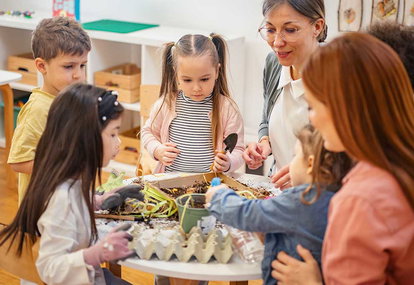
We are born curious. You can probably think of a child — maybe even your own — who always asks the “why” questions. Preschoolers are curious. Their curiosity is not something we have to create; it is already there, waiting to be nurtured.
Curiosity is defined as the desire for knowledge (Parlakian 2020).1 Preschoolers want to know how the world works.
As a Mission Friends leader, we have the wonderful opportunity to create classrooms that encourage their curiosity, not only about the world, but also about God’s Word, Jesus, the Bible, the people around them — anything and everything! As we provide missions-based activities and group times each week, we will help preschoolers use their curiosity to build a strong biblical foundation.
How Can We Encourage Curiosity?
- Encourage preschoolers to ask questions. At times, answer their question with, “What do you think?” This helps challenge their thinking, encourages them to develop reasoning skills in a safe environment, and invites them to continue being curious. This will translate later in their spiritual walk as they learn how to and practice discerning what is true and what is not biblical.
- Model curiosity. Talk out loud when assembling an activity or sharing a story about a missionary. For example, “I wonder if they ….” This simple practice shows preschoolers that learning never stops and that adults continue to ask questions and grow.
- Provide books. Not only will books help preschoolers explore their curiosity, but books will also foster a love of reading (Anderson 2025).2 Reading books allows preschoolers to wonder and learn about God’s world.
- With older preschoolers, scaffold their learning. For example, ask them what they already know about a particular topic, and then share something they may not know to encourage a desire to learn more. Building on prior knowledge strengthens comprehension and engagement.
- Provide hands-on learning opportunities. These experiences make abstract truths tangible and memorable. Preschoolers learn best by actively doing and enjoying hands-on activities. Provide open-ended activities to allow them to explore with curiosity.
- Give preschoolers choices in which activity area they would like to go to. This will allow them to be more engaged and motivated in learning. They will naturally choose activities relating to things in which they are curious.
- Create playful and safe environments for preschoolers. “Play supports learning, but it supports learning for lots of reasons. It supports learning because children are naturally engaged, because it’s fun. It also because they feel safe” (Anderson 2025).3 When preschoolers feel emotionally secure, they are more willing to explore, question, and grow.
Curiosity is one of the most essential aspects of learning. As Mission Friends leaders, let’s continue to invite preschoolers to be curious about the things of God and how He is working around the world. By nurturing their natural curiosity today, we are helping cultivate faithful followers who will seek God for a lifetime.
by Celeste Albaugh
1. Rebecca Parlakian, “Rocking and Rolling. Fostering Curiosity in Infants and Toddlers,”, NAEYC, 2020, https://www.naeyc.org/resources/pubs/yc/dec2020/fostering-curiosity-infants
2. Jill Anderson, “How Curiosity Can Unlock Learning for Every Child,” Harvard Graduate School of Education, October 24, 2025, https://www.gse.harvard.edu/ideas/edcast/25/10/how-curiosity-can-unlock-learning-every-child
3. Jill Anderson, “How Curiosity Can Unlock Learning for Every Child,” Harvard Graduate School of Education, October 24, 2025, https://www.gse.harvard.edu/ideas/edcast/25/10/how-curiosity-can-unlock-learning-every-child