Come Play with Me! Encouraging Cooperative Play in Preschoolers
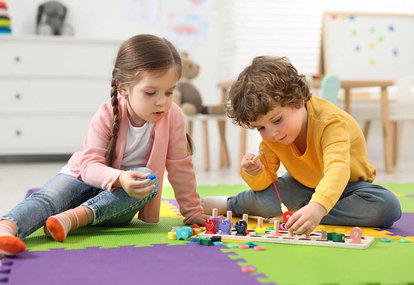
“Come play with me!”
I love hearing preschoolers say these words to their friends as they learn to play and get along with others. These words are indicative of cooperative play.
Cooperative play is a stage of play that helps preschoolers develop social and emotional skills. As preschoolers grow in cooperative play, they gain abilities in communicating and responding to others. In guiding preschoolers in cooperative play, we set the foundation for communication and cooperation that will follow preschoolers for the rest of their lives.
The skills gained through cooperative play can help preschoolers when they feel lonely. Being able to communicate and relate well to others can also help to curb loneliness in years to come as preschoolers grow and develop.
What Is Cooperative Play?
Preschoolers go through stages of play, beginning with solitary play as infants and toddlers. In solitary play, they are involved in activities on their own without engaging with other preschoolers.
Through the twos, preschoolers move into the stage of parallel play. In this stage, they might be next to another preschooler and use the same materials, but they do not work with one another to engage in play.
Throughout the threes, fours, and fives, preschoolers become involved in cooperative play. In this stage, they communicate with each other and work toward the same goal as they play together. For example, they work on a puzzle together or plan a structure together with blocks.
In cooperative play, preschoolers learn to express their own ideas and listen to the ideas of others. They learn the give and take of communication as they respond to others. Preschoolers learn to negotiate with others and solve problems together. Through cooperative play, they are involved in sharing materials and taking turns. Sometimes they determine their own rules for a game they make up.
How to Encourage Cooperative Play
Follow these tips and ideas for involving preschoolers in cooperative play.
- Help preschoolers know each other’s names by playing a name game such as tossing a ball and as each child catches the ball, the group says his or her name.
- Encourage preschoolers to work together in interest areas to build a structure with blocks or do an art activity together.
- Plan an art activity to do as a group, such as making a mural.
- Use the Bible thought, We work together (see 1 Cor. 3:9).
- Allow preschoolers to work out difficulties and solve problems. Provide guidance as needed.
- Play a group game during Group Time.
- Provide props for preschoolers to act out the Group Time story.
- Read Be Kind, Make Friends with preschoolers. Talk about ways they can be friends with one another.
- Host a “Come and Play!” event designed for new preschoolers to come and play with your current Mission Friends. Provide a few games, such as ring toss, in which preschoolers play the game along with another preschooler. Make a mural about friends, and read Be Kind, Make Friends. Invite new preschoolers to come and play in Mission Friends on a regular basis.
Preschoolers grow and learn as they are involved in cooperative play. They learn how to discern the needs of others, ways of sharing ideas and thoughts, and how to collaborate with others. We set the stage for social and emotional growth as we provide opportunities for cooperative play.
Joye Smith served many years as the preschool consultant for Woman’s Missionary Union.